
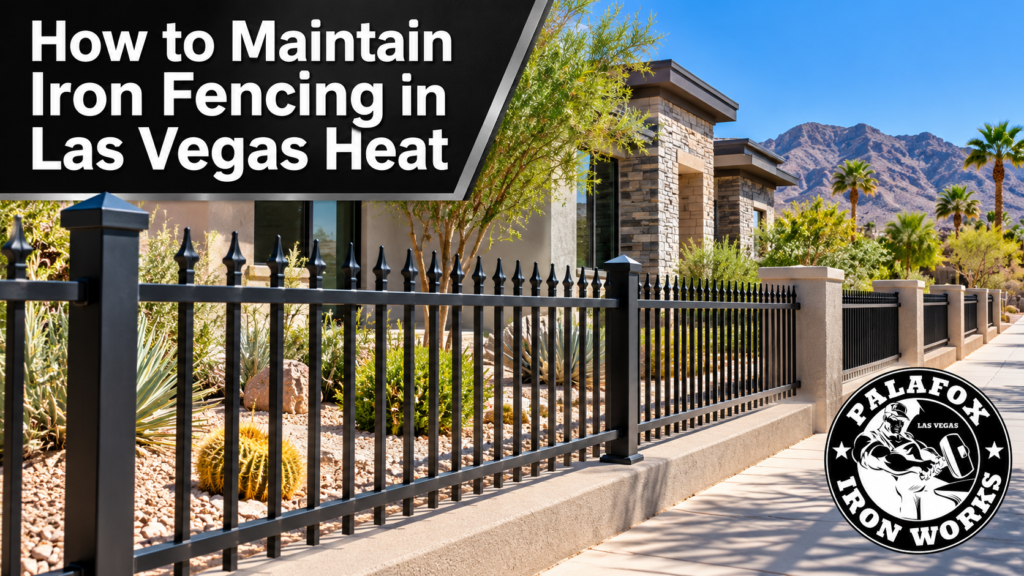
Las Vegas heat can be hard on outdoor metal surfaces. Strong sun, high temperatures, dust, irrigation overspray, and occasional moisture can gradually affect the finish on iron fencing and create conditions where rust begins to form. Good iron fence maintenance in Las Vegas is mainly about keeping the surface clean, protecting the coating, and addressing small areas of damage before they spread. A consistent maintenance routine can help preserve the appearance and condition of both decorative and functional fencing while reducing the need for more extensive repairs later.
Inspect Your Iron Fence Regularly
The first step in wrought iron fence maintenance is routine inspection. Walk along the fence and look closely at the surface, joints, posts, gates, and hardware.
Common signs of iron fence damage include:
- Chipped or peeling paint
- Small rust spots
- Fading or chalky finishes
- Loose fasteners
- Cracks around welded joints
- Gates that sag or drag
- Areas where water repeatedly collects
- Scratches that expose bare metal
Pay extra attention to lower sections of the fence, gate hinges, welds, and places near sprinklers or landscaping. These areas can experience more moisture or physical wear than the rest of the fence.
Finding minor damage early usually makes maintenance easier.
Keep the Fence Clean and Free of Dust
Iron fence cleaning and maintenance should include removing dust, dirt, bird droppings, plant debris, and other buildup. In a dry environment, dust can accumulate quickly and make it harder to notice damage underneath.
For routine cleaning, use water, a soft cloth or sponge, and a mild cleaning solution suitable for painted metal. Avoid aggressive abrasives that could scratch the protective finish.
Rinse away residue and allow the fence to dry fully. While cleaning, inspect the surface for bubbles, cracks, or exposed metal.
A clean fence is easier to evaluate and maintain.
Prevent Rust Before It Spreads
Iron fence rust prevention depends heavily on maintaining the protective barrier between the metal and the environment. Rust can begin where paint or coating has been scratched, chipped, or worn away.
To help prevent rust on iron fences:
- Repair chipped paint promptly
- Keep irrigation water from repeatedly hitting the fence
- Remove plant growth that traps moisture against metal
- Clean dirt from joints and decorative details
- Check welded areas for exposed metal
- Address small rust spots before they expand
Do not simply paint over active rust without proper surface preparation. Loose rust and failing coatings should be removed first so the new finish can bond correctly.
Protect Iron Fencing From Las Vegas Heat and Sun
Maintaining iron fences in hot weather requires attention to the coating. Heat itself does not automatically destroy iron, but prolonged sun exposure can affect certain finishes over time, especially when a coating is already aging or damaged.
A suitable exterior finish helps protect the metal from environmental exposure. Inspect sun-facing sections more closely because fading, cracking, or deterioration may appear there first.
If you are maintaining custom iron fencing in Las Vegas, follow the care guidance for the specific finish used on your fence. Powder-coated, painted, and specialty-finished surfaces may require different cleaning and repair methods.
Avoid using harsh products unless you know they are compatible with the existing coating.
Use a Protective Coating When Needed
An iron fence protective coating creates a barrier that helps limit direct exposure to moisture and environmental wear. The right product depends on the existing finish, surface condition, and whether the fencing is painted, powder-coated, or otherwise treated.
Before applying any coating, the surface should be clean, dry, and properly prepared. Applying a new finish over loose paint, dirt, or corrosion can lead to poor adhesion.
For larger refinishing projects, professional surface preparation may be worthwhile. Proper preparation often matters as much as the coating itself.
Repaint Damaged or Faded Areas
Iron fence repainting may become necessary when the existing finish begins to peel, crack, fade heavily, or expose bare metal.
Small areas can sometimes be touched up, while widespread coating failure may require more extensive refinishing. The basic process usually involves:
- Cleaning the affected area
- Removing loose paint and rust
- Smoothing and preparing the surface
- Applying a compatible primer if needed
- Applying an exterior metal coating or paint
- Allowing proper drying and curing time
Choose products intended for exterior metal and compatible with the existing surface. Avoid rushing the preparation stage, especially where corrosion is present.
Check Gates, Hinges, and Moving Parts
Outdoor iron fence maintenance should include more than the fence panels. Gates experience frequent movement and often show wear sooner than stationary sections.
Inspect hinges, latches, closers, rollers, and mounting points. If a gate becomes difficult to open, starts dragging, or no longer aligns correctly, the issue may involve loose hardware, movement at the posts, or wear at the hinges.
Lubricate moving components only with products suitable for the specific hardware. Tighten loose fasteners when appropriate, but avoid forcing components back into alignment if the structure itself appears damaged.
Control Water Around the Fence
Las Vegas is known for dry weather, but water exposure can still affect iron fencing. Irrigation systems, pool splash, cleaning, and occasional rainfall can leave moisture on areas where the coating is damaged.
Adjust sprinklers so they do not repeatedly spray wrought iron fencing. Keep soil, mulch, and wet vegetation from sitting directly against the metal where possible.
After washing the fence, allow it to dry thoroughly. Areas where water collects around posts or decorative joints deserve extra attention during inspections.
Avoid Damage From Landscaping and Yard Equipment
Physical damage is another common reason coatings fail. Lawn tools, garden equipment, branches, furniture, or stored items can scratch painted iron and expose the underlying metal.
Keep plants trimmed away from the fence and avoid attaching items that rub against the finish. If landscaping work causes a chip or scratch, inspect the area and touch up the protective finish as needed.
This simple habit supports long-lasting iron fence care.
Create a Simple Maintenance Schedule
A practical iron fence care Las Vegas routine does not need to be complicated. Regular inspections and prompt repairs matter more than waiting until the fence shows widespread deterioration.
A useful schedule can include:
- Visual inspections several times throughout the year
- Cleaning when dust and debris build up
- Checks after landscaping or construction work
- Rust treatment as soon as small spots appear
- Touch-up painting where coatings are damaged
- Periodic inspection of gates and hardware
The exact frequency depends on the fence condition, finish, location, and exposure.
Conclusion
Effective iron fence maintenance in Las Vegas comes down to protecting the metal surface and dealing with small problems early. Regular cleaning, rust prevention, coating inspections, repainting, and gate maintenance can help preserve both the appearance and function of the fence. Pay close attention to sun-exposed areas, irrigation zones, scratches, and welded joints where deterioration may begin. A simple maintenance routine can help Las Vegas iron fencing remain attractive, stable, and easier to care for over the long term.
FAQ's
Inspect it periodically throughout the year and after anything that could damage the surface, such as landscaping, construction, or impact. More frequent checks may help if sprinklers, pool water, or heavy sun exposure affect the fence.
Keep its protective finish in good condition, clean the surface regularly, and repair chipped or deteriorating coatings. Use exterior products that are appropriate for metal and compatible with the existing finish.
Prevent moisture from reaching bare metal. Keep the fence clean, repair scratches and chips promptly, redirect sprinkler overspray, and address early rust before it spreads.
Repainting may be needed when the finish is peeling, cracking, heavily faded, or exposing bare metal. Small defects can often be touched up, while widespread failure may require full refinishing.

 ICONIER Digital Agency