
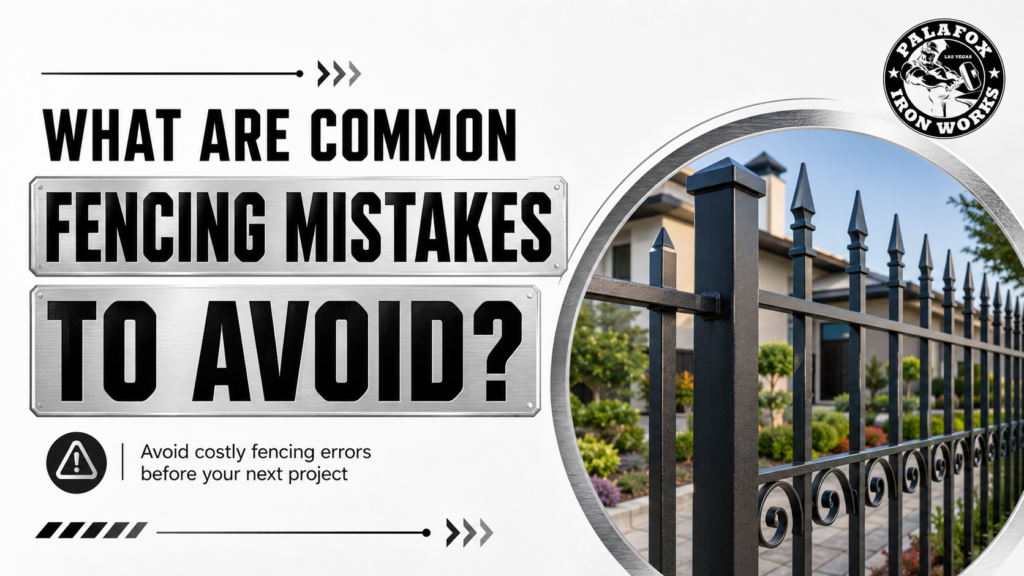
A fence should do more than mark a boundary. It should improve security, add curb appeal, and hold up over time. The problem is that many fence projects fail because of a few avoidable mistakes during planning, installation, or maintenance. A crooked line, weak post footing, or the wrong material can turn a good investment into a costly repair.
At Palafox Creative Iron Works, we see how small fencing mistakes can lead to major problems later. Whether the project is for a home, apartment community, or commercial property, the best results come from careful planning and professional workmanship.
The most common fencing mistakes
1. Choosing the wrong fence type
One of the biggest fence planning mistakes is selecting a style that looks good but does not fit the property’s needs. A decorative fence may be attractive, but it may not provide the security, durability, or privacy the space requires.
For example:
- Residential properties often need a balance of style and privacy.
- Commercial sites usually need stronger security and controlled access.
- Apartment properties need durable fencing that can handle frequent use.
The right fence type depends on purpose, budget, maintenance needs, and location.
2. Ignoring property lines
Fence property line mistakes can create disputes with neighbors and may even require parts of the fence to be moved later. This is one of the most expensive fence installation mistakes because it affects both legal and practical issues.
Before building, verify:
- The property survey
- Easements
- HOA rules
- Local zoning or setback rules
A few minutes of checking can prevent a major headache.
3. Wrong fence post installation
Wrong fence post installation is one of the most common fence construction errors. Posts are the foundation of the entire system. If they are too shallow, uneven, or not set correctly, the fence can lean, sag, or fail early.
Strong posts usually require:
- Proper depth
- Correct spacing
- Solid concrete footing
- Good drainage around the base
This is especially important for iron fencing, which depends on precise support for long-term stability.
4. Poor fence alignment
Poor fence alignment affects both appearance and strength. Even a durable fence can look unprofessional if the line is uneven or the panels do not sit properly.
Alignment issues often happen when:
- Measurements are rushed
- The ground is uneven
- Posts are not set straight
- The layout is not marked carefully
Precision matters. A clean, straight fence always looks better and performs better.
5. Using weak or low-quality materials
Fence material mistakes often show up after the first season of weather exposure. Cheap materials may rust, warp, crack, or loosen faster than expected. In the long run, that usually means more repairs and more cost.
For property owners, choosing quality materials is not just about appearance. It is about durability, safety, and long-term value.
6. Incorrect fence spacing and height
Incorrect fence spacing can weaken the structure and create visual gaps. Fence height mistakes can also cause problems if the fence is too low for privacy or too tall for local rules.
Good spacing helps with:
- Structural strength
- Even appearance
- Security
- Gate function
Height should always be planned around the property’s use and local code requirements.
7. Weak fence foundation
A weak fence foundation is a common cause of early failure. Soil movement, poor drainage, and shallow footings can all reduce stability over time.
If a property has soft soil or drainage concerns, the foundation should be planned carefully before installation begins. This is one reason professional fence installation tips matter so much in real-world projects.
8. Skipping maintenance
Fence maintenance mistakes are easy to overlook. Many property owners assume a fence will take care of itself, but regular inspection prevents larger damage later.
Watch for:
- Rust or corrosion
- Loose hardware
- Leaning sections
- Gate issues
- Cracks or movement at the base
Small repairs handled early are usually much cheaper than major fence repair mistakes after damage spreads.
Fence mistakes at a glance
Mistake | Common result | Better approach |
Wrong fence type | Poor security or weak privacy | Match the fence to the property’s purpose |
Bad post installation | Leaning or sagging fence | Set posts deep and level |
Poor alignment | Uneven appearance | Measure and mark layout carefully |
Cheap materials | Early wear and repairs | Use quality materials built for durability |
Skipped maintenance | Faster deterioration | Inspect and repair regularly |
Best fence installation practices
The best fence installation practices start before digging ever begins.
- Confirm the property line.
- Choose the right fence style for the site.
- Use materials that fit the climate and purpose.
- Set posts correctly.
- Check alignment and spacing as you go.
- Make sure the foundation is strong.
- Plan for maintenance after installation.
For residential fencing tips, commercial security, and apartment perimeter fencing, good planning is always cheaper than fixing avoidable errors later.
Conclusion
Avoiding common fencing mistakes starts with smart planning and quality workmanship. The biggest problems usually come from the wrong fence type, bad post installation, weak foundations, and poor maintenance. When those details are handled properly, a fence lasts longer, looks better, and works the way it should.
At Palafox Creative Iron Works, we focus on durable, attractive fencing built with precision and care. For residential, commercial, and apartment properties, the right installation approach makes all the difference.
FAQ's
The most common fencing mistake is poor fence post installation. If the posts are not set correctly, the entire fence can shift, lean, or fail.
Fences often lean because of weak foundations, shallow posts, soil movement, or drainage problems.
Check a current survey, review local rules, and confirm boundaries before any work begins.
Iron fences require more precision than many basic fence types, especially when it comes to alignment, spacing, and post support.
Yes, especially for custom iron fencing. An experienced team helps reduce fence contractor mistakes and improves long-term performance.

 ICONIER Digital Agency