
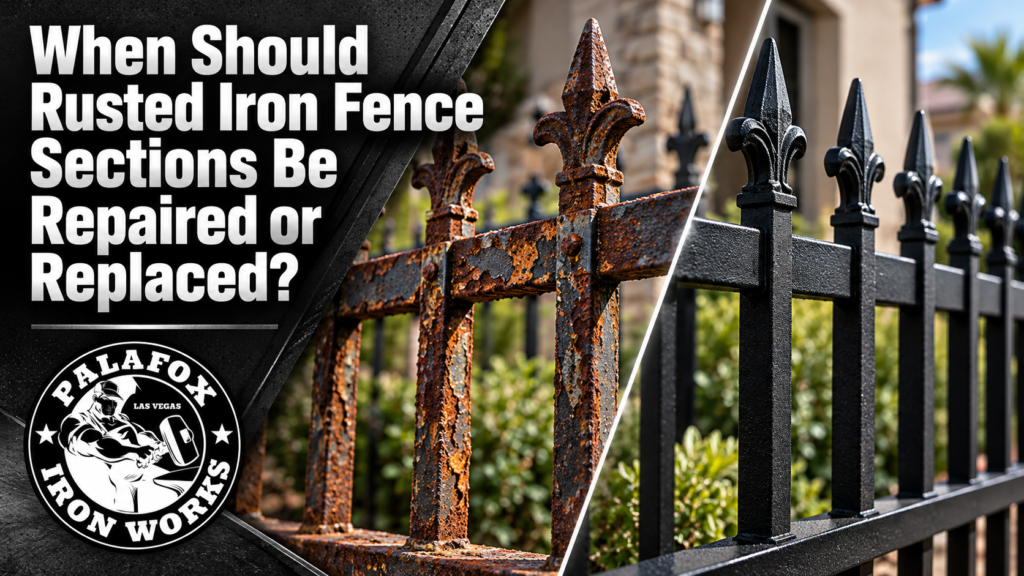
Iron fence repair is worth considering when corrosion is limited and the remaining metal, supports, and connections can still perform their intended function. Replacement becomes more likely when rust has caused substantial metal loss, repeated failures, or damage that cannot be addressed reliably within the existing section.
The color of the fence does not settle the decision. A large area of surface rust may be repairable, while a small damaged connection can compromise an otherwise attractive panel. This guide explains what to assess, which questions to ask, and how to compare repair and replacement without relying on appearances alone.
Separate Surface Rust From Metal Loss
Surface rust affects the outer metal and often appears where a coating has worn or been damaged. It deserves attention, but it does not automatically mean the entire fence must be replaced.
More serious corrosion can produce deep pits, flaking scale, thinning members, or holes. Those signs need evaluation of the remaining metal beneath the visible deterioration.
Do not use paint thickness or a rust converter as evidence that a component is structurally sound. Protective treatments cannot restore metal that has already been lost.
Ask the repair professional to distinguish cosmetic deterioration from damage affecting support or connections. The assessment should explain the condition of the actual members, not simply recommend painting over the whole fence.
Inspect the Fence as a Connected System
A panel depends on posts, brackets, welds, fasteners, and their supporting foundations. A repair that addresses only decorative bars can overlook the part responsible for keeping the fence upright.
Look for visible leaning, separation, displaced panels, or broken connections without forcing the fence to move. Keep people away from unstable sections until they are assessed.
Pay Attention to Posts and Lower Rails
Lower components often face repeated moisture from soil, irrigation, or trapped debris. Post bases can also conceal deterioration at or below the visible surface.
A post may look acceptable above ground while its base needs further investigation. Ask whether the assessment includes the supporting connection and foundation condition.
Distinguish Corrosion From Movement
A leaning fence is not always a rust problem. Settlement, impact, loose attachments, or changes in surrounding ground can affect alignment.
Repainting will not correct an unstable foundation or restore a broken connection. Identify the cause before deciding what the repair should include.
When Localized Iron Fence Repair Makes Sense
Repair may be appropriate when damage is confined to a small area and the surrounding fence remains suitable. The work might involve a damaged member, connection, or support rather than replacing an entire run.
A useful assessment explains which pieces can stay and which need replacement. “Repair” can include replacing one component within a retained panel.
Palafox Creative Iron Works’ iron fence repair and fencing options provide a relevant starting point for discussing damaged sections. Share photographs of the affected area and the adjoining fence so the review includes the connections.
Do not assume every metal component can be repaired by the same welding method. The material, thickness, condition, and connection design influence the appropriate approach.
When Replacing a Section Is More Practical
Replacement becomes more attractive when the damage extends through several members or critical attachments. A panel with widespread thinning may offer little reliable material for localized repair.
Repeated repairs to the same deteriorated area are another reason to reconsider the approach. They may indicate that too much compromised metal remains or that the underlying moisture exposure has not been resolved.
The entire fence does not necessarily need replacement because one section has failed. Compare a targeted section replacement with the condition of neighboring panels and posts.
Ask whether the replacement can use sound existing supports. If the posts or foundations are also compromised, include them in the proposed work rather than treating them as usable by default.
There is no universal percentage of visible rust that determines replacement. The location and depth of deterioration matter more than a simple surface-area estimate.
Address Why the Rust Keeps Returning
Look for irrigation spraying the fence, soil piled against lower members, leaves holding moisture, or areas where damaged coatings remain exposed. These conditions can undermine either repair or replacement.
Plan practical changes to keep debris and repeated wetting away where possible. Do not alter drainage or the fence structure without reviewing the consequences.
For hollow components, ask whether trapped moisture is part of the problem and how the proposed design handles it. Avoid drilling improvised holes as a substitute for an appropriate detail.
Include Surface Preparation and Finish in the Scope
A durable coating begins with preparation suited to the metal and the chosen system. Loose material, contamination, and damaged existing finishes require attention before recoating.
Have the contractor identify the proposed preparation, primer or other protective treatment, and topcoat. Confirm compatibility and application instructions.
Older coatings may need assessment before they are disturbed. Confirm the appropriate preparation and containment approach rather than assuming aggressive removal is suitable for every fence.
Palafox’s iron repair and fabrication services can help frame a discussion of the metalwork and finishing scope. Ask which areas are included and how new or repaired components will coordinate with the retained fence.
Compare Complete Repair and Replacement Proposals
Evaluate proposals against the same concerns:
- The condition of the panels, posts, and connections.
- Which components are retained, repaired, or replaced.
- Surface preparation and the specified finish.
- Matching of height, pattern, and visible alignment.
- Changes needed to reduce recurring moisture exposure.
- Access, cleanup, and any required approvals.
If the fence forms a pool barrier or another regulated enclosure, include those requirements in the assessment. A repaired appearance alone does not establish that the barrier performs as required.
Conclusion
Decide on iron fence repair or replacement by evaluating remaining metal, support, and the cause of deterioration. Localized damage may justify a targeted repair, while extensive thinning or failed connections can make section replacement more practical. Request a scope that includes preparation, finishing, and any changes needed to reduce recurring moisture. Palafox Creative Iron Works can discuss those options against the condition of the existing fence. The goal is a supported, usable fence line with a clear repair plan, not simply a fresh appearance.
FAQ's
No. Color alone cannot establish the depth of corrosion or remaining metal. Assess the members and connections beneath the visible rust.
Possibly, if the panel remains sound and a suitable support repair or replacement is practical. The connection and foundation need review.
No. Paint can protect prepared metal, but it cannot restore lost material or correct an unstable support.

 ICONIER Digital Agency